The Treasure Experience

Advanced technical power

Nova Ray®

The only submersible remotely operated vehicle capable of operating at depth or altitude from a moving surface platform.

Inventors Marc and Krist Geriene spent over seven years engineering this technology to solve the problem that had limited the industry for decades: cable drag in strong currents. The Treasure Experience holds exclusive rights to deploy the patented platform.

The breakthrough

Everything else fights the water.
This uses it.

The problem

Conventional ROVs fight the water

A flat-wing or open-frame vehicle on a tether is dragged sideways by current, and the umbilical itself generates lift that pulls the vehicle off station. Operators compensate with more cable, more weight and more power, and still lose the ability to hold a line in a cross-current. Flat wings also develop Dutch Roll Instability, a rolling oscillation that makes stable survey flight impossible.
The solution

The arcuate wing uses the water instead

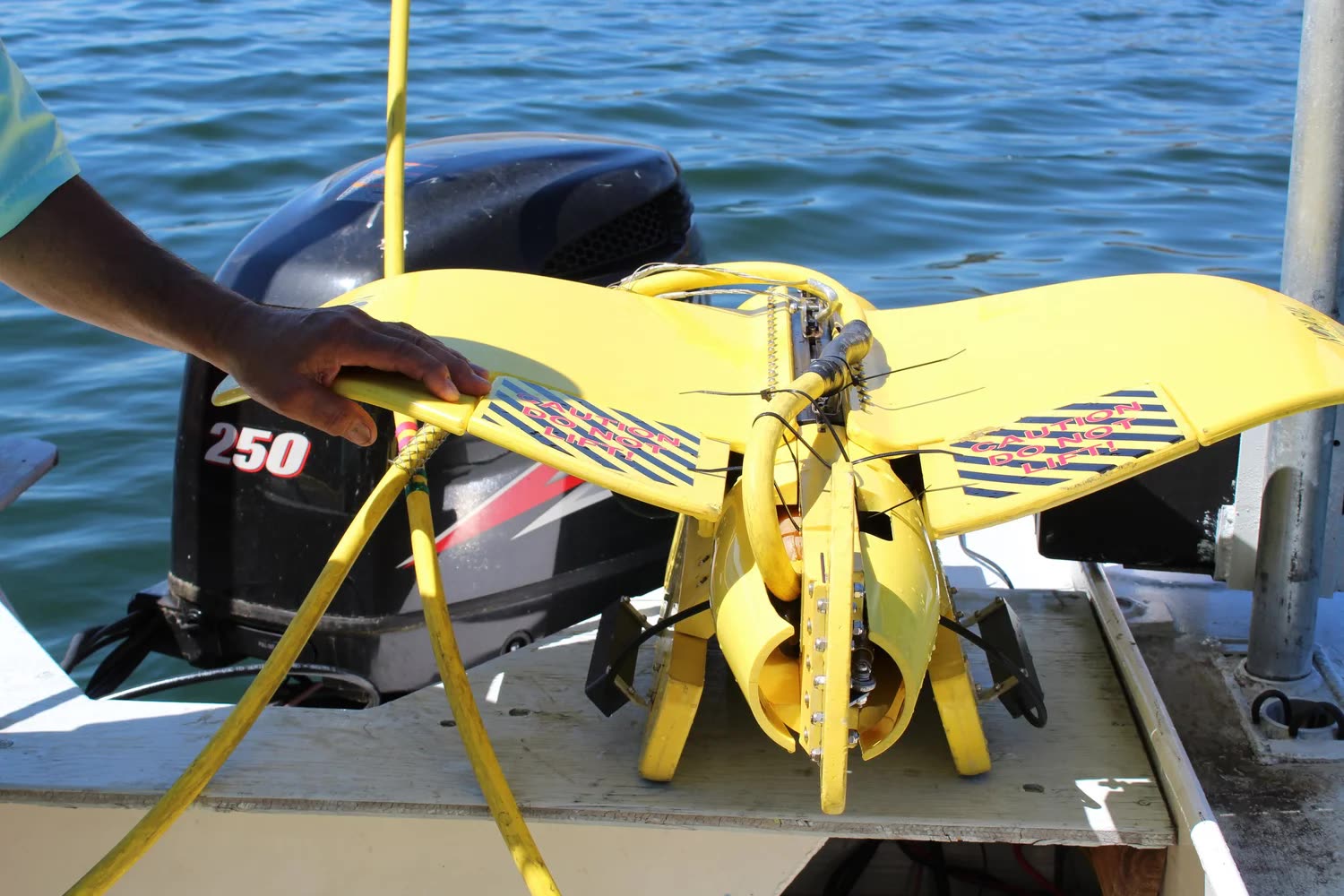
The Nova Ray's arcuate, bow-shaped wing eliminates Dutch Roll Instability entirely and lets the vehicle hold stable axis flight in current. Rather than resisting flow, the platform effectively uses water flow rather than resistance to maintain operational control, counteracting the lifting force of the umbilical as it goes.

The platform

The arcuate wing

Bow-shaped rather than flat. That single decision removes Dutch Roll Instability, counteracts the lift the umbilical generates, and lets the vehicle hold a line while the surface platform is still making way.

The Nova Ray platform on the transom of a boat, wing and tether visible
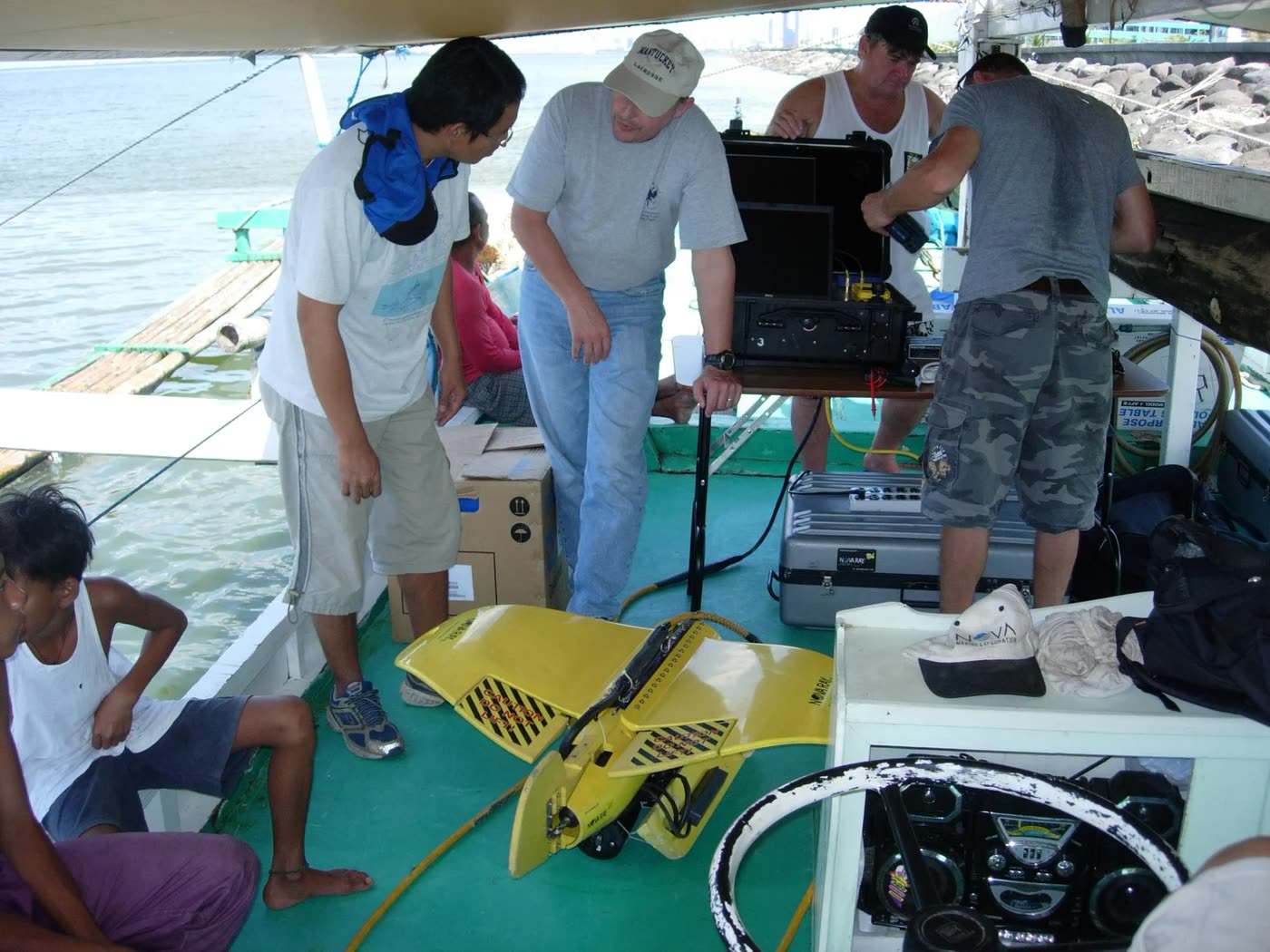
Crew setting up the topside console and the platform on deck

Capabilities

What that buys you on site

01

Stable axis flight in current

The arcuate wing geometry eliminates the Dutch Roll Instability inherent to flat-wing designs, holding attitude in turbulent and cross-current conditions.

02

Counteracts umbilical lift

The wing works against the lifting force generated by the tether, so the vehicle stays on station instead of being pulled up and off target.

03

Less cable for the same depth

Because the platform flies rather than hangs, it reaches working depth on substantially less umbilical than a conventional ROV requires.

04

Powered or towed

Functions effectively under its own thruster power and in tow mode behind a moving surface platform, which is the capability nothing else on the market has.

05

Tight maneuverability

Thrusters sit close to the control surfaces, giving a short moment arm and precise handling around a wreck site.

06

Built for the working ocean

Designed for real survey conditions rather than flat-calm test tanks: turbulence, cross-currents, and a vessel that is still making way.

Watch it work, from the inside

Members get live-stream feeds from the platform while it is on a site. This is the view you get.